Max B: The Rapper Who Influenced Modern Hip-Hop From a Prison Cell
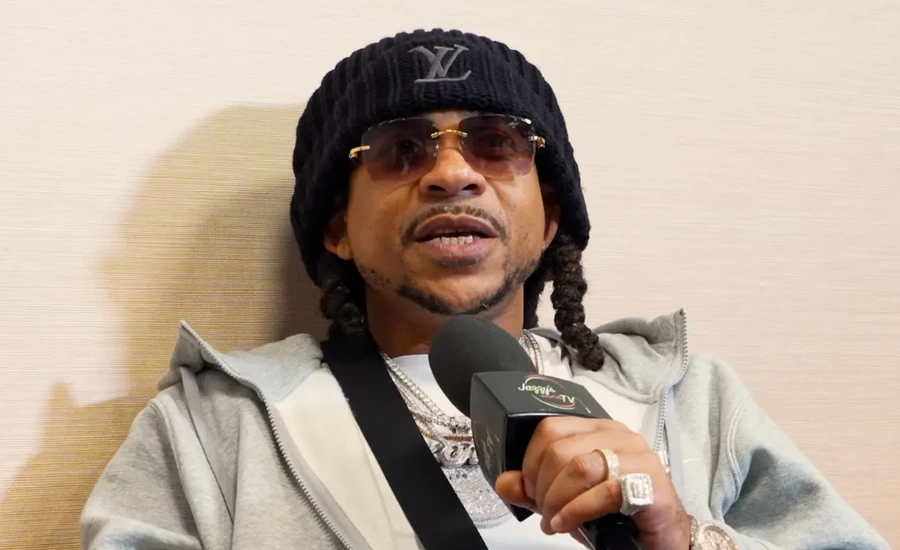
He coined a word that is now part of everyday rap vocabulary. He never had a platinum album. He spent close to sixteen years in prison for a crime where someone else pulled the trigger. And artists from French Montana to Kanye West have publicly credited him as a reason their own sound exists. Max B is one of the strangest success stories in modern hip-hop — because most of his influence happened while he was locked up and could not release a single song.
Quick Bio Table
| Detail | Info |
|---|---|
| Real Name | Charley (Charly) Wingate |
| Stage Name | Max B — short for Max Biggaveli |
| Other Names | Biggaveli, The Silver Surfer, Wavy Crockett, Wave God |
| Born | May 21, 1978 |
| Birthplace | Harlem, New York City |
| Age (2026) | 47 |
| Genre | Hip-hop, melodic rap |
| Years Active | 2005 to present |
| Known For | Coining the term “wavy”; melodic, free-flowing rap style |
| Key Mixtapes | Million Dollar Baby, Public Domain series, Coke Wave series |
| Major Collaborator | French Montana |
| Group Affiliation | ByrdGang (founding member, formed by Jim Jones, 2006) |
| Criminal Conviction | Felony murder, armed robbery, aggravated manslaughter (related to a 2006 case) |
| Original Sentence | 75 years (2009) |
| Final Sentence | 20 years, later reduced to 12 with time served |
| Released From Prison | November 9, 2025 |
| Total Time Served | Approximately 16 years |
Who Is Max B — And Why Does Hip-Hop Talk About Him So Much?
Charley Wingate grew up in Harlem and entered the rap scene through his connection to Cam’ron and the Diplomats camp. That relationship introduced him to Jim Jones, who later built ByrdGang in 2006, with Max B as a founding member. He appeared on Jim Jones’ Hustler’s P.O.M.E., contributing the hook on the song “Baby Girl” — one of his earliest moments of real visibility.
From there he built a reputation through an enormous volume of mixtapes released in the mid-2000s, including Million Dollar Baby, Public Domain, and Domain Diego. These were not polished studio albums distributed through major retail. They were street-level releases, the kind that spread through word of mouth, burned CDs, and early internet file sharing. That distribution method matters because it shaped how his influence spread — not through chart numbers, but through the ears of other rappers who were paying close attention.
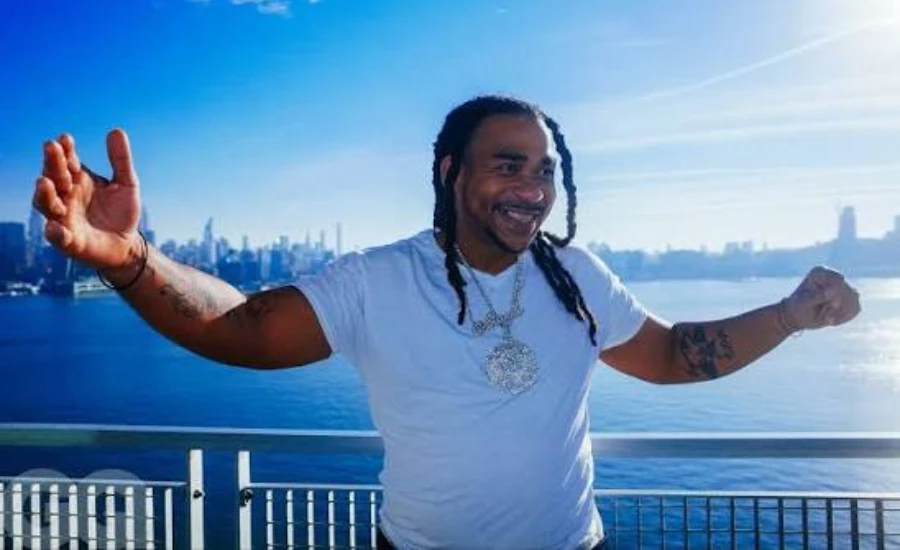
He coined the word “wavy.” That single word has become permanent vocabulary in hip-hop and beyond, used to describe a smooth, melodic, slightly hazy aesthetic in music, fashion, and general culture. Kanye West’s album “The Life of Pablo” was originally titled “Waves” as a direct nod to Max B’s influence. That is not a minor claim — it comes from reporting around the album’s title changes and has been referenced repeatedly by people close to that project.
The Sound: What Made Him Different
Before “melodic rap” became a defined subgenre with its own name, Max B was already doing it. His style blended singing and rapping in a way that was unusual for Harlem street rap at the time — a genre that, in the mid-2000s, leaned heavily toward hard-edged, unmelodic delivery.
He brought something looser. A flow that drifted instead of snapping to a rigid beat. A tone that was emotional without sacrificing the grit that defined his environment. This combination — melody plus street credibility — became the blueprint that a huge number of later artists would build entire careers on, whether they cite him directly or not.
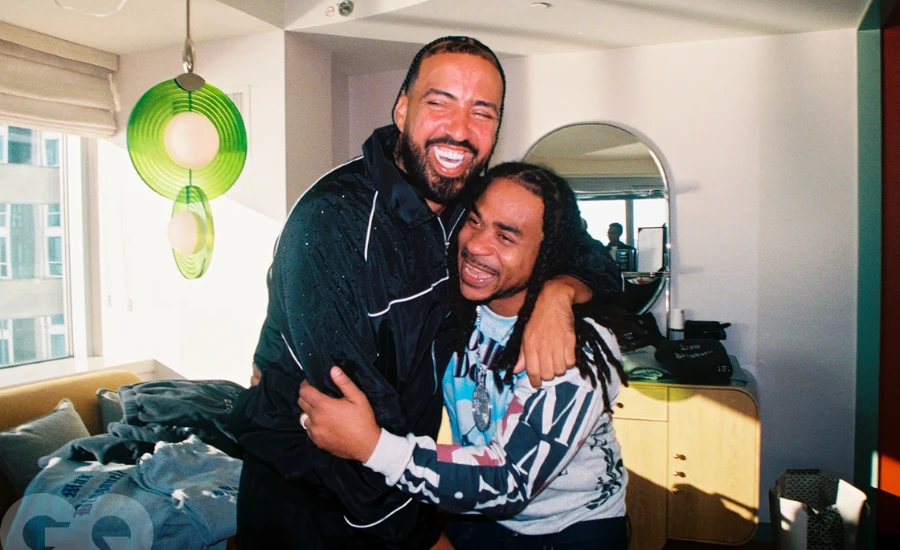
French Montana, Wiz Khalifa, Curren$y, and Kanye West are the names most consistently mentioned as artists who absorbed and carried forward elements of his style. French Montana in particular became his closest musical partner. They worked together extensively, releasing the Coke Wave mixtape series with producer Dame Grease — a project widely described as hazy, melodic, and central to defining what “wavy” actually sounds like in practice.
The Crime That Changed Everything
In September 2006, a robbery at a Holiday Inn in Fort Lee, New Jersey went fatally wrong. The basic facts, established through trial testimony and later court documents, are these. Allan “Jay” Plowden was staying at the hotel with his business associate David Taylor. Witnesses had reportedly seen the two men around Harlem in the days before, flashing cash and new cars — details that allegedly drew attention.
Max B’s then-girlfriend Gina Conway and his stepbrother Kelvin Leerdam went to the hotel room and held Plowden at gunpoint, restraining him with duct tape. Plowden told them he did not have the money — his partner Taylor did. They had Plowden call Taylor to the room. Within minutes of Taylor’s arrival, he was shot dead. According to Conway’s later testimony, Leerdam fired the fatal shot. Conway and Leerdam fled. Plowden freed himself and alerted hotel staff. Within a week, all three — Conway, Leerdam, and Wingate — were arrested.
Max B was not in the room. He did not pull the trigger. The prosecution’s case rested on the felony murder rule — a legal doctrine that holds all participants in a dangerous felony responsible for a resulting death, even if they did not personally commit the killing or intend for anyone to die. Prosecutors argued Wingate had planned the robbery, supplied the firearm, stayed in contact with Taylor during the incident, and stood to benefit from the stolen property.
In June 2009, following a mistrial in an earlier proceeding, a jury convicted Wingate on nine counts including felony murder, armed robbery, kidnapping, and conspiracy. He was sentenced to 75 years. Leerdam, found to have fired the fatal shot, received life plus 35 years. Conway received 15 years and her testimony was central to convicting both men.
The Legal Fight That Cut His Sentence
Wingate’s first appeal, filed in 2010, argued the jury had been improperly instructed, the sentence was excessive, and his trial should have been separated from Leerdam’s. That appeal was denied in 2012, and the original conviction stood for several more years.
The case eventually turned in 2016, when his legal team successfully argued that his original trial attorney had provided ineffective counsel, including an undisclosed conflict of interest. His conviction was vacated. Rather than face a full retrial, he accepted a plea deal — pleading guilty to aggravated manslaughter. Bergen County Judge James Guida resentenced him to 20 years. Under this new arrangement, the original first-degree murder, first-degree robbery, and first-degree kidnapping charges were formally dropped from his record.
A further reduction came in 2019, when his sentence was cut from 20 years to 12, factoring in time served and sentencing guidelines from an earlier judicial review. That review concluded the original sentencing term had been disproportionate to the offense.
This entire sequence matters because it complicates a simple narrative. He was convicted of felony murder in a case where he did not commit the killing himself, his original 75-year sentence was successively found to be excessive by multiple courts, and his ultimate conviction — aggravated manslaughter — reflects a substantially different legal reality than the original verdict. None of this erases the fact that a man died as a result of a robbery Max B was found to have planned. Both things are true at once, and most casual coverage of his story flattens this complexity into either “he’s innocent” or “he’s a murderer,” when the actual legal record is more layered than either framing.
Sixteen Years, And the Music Never Stopped Mattering
Here is the part that makes Max B’s story genuinely unusual in hip-hop history. He was convicted in 2009. He did not walk free until November 9, 2025. For roughly sixteen years, he could not record new music, could not tour, could not capitalize commercially on the influence he had already created. And yet his name never disappeared from hip-hop conversation.
While incarcerated, more material continued to surface, including Public Domain 6: Walking the Plank in 2009, one of the final releases from what is often called his first free-man era. French Montana kept the Max B legacy visible through his own career — releasing the “Wave Gods” mixtape, featuring Max B alongside Kanye West, Nas, and Future, and repeatedly crediting him in interviews. French has stated publicly that Kanye West wanted to help Max B with his legal situation, a claim made directly in interview footage from Billboard.
The influence compounded over the prison years specifically because the culture had time to absorb and reproduce his sound without him being present to capitalize on it directly. Melodic rap became dominant in mainstream hip-hop throughout the 2010s and 2020s. Max B was rarely credited by name in mainstream coverage of that shift, but artists and producers who were paying close attention to where the sound originated kept saying it: this started with Max B.
What Happened When He Got Out
He was released from Northern State Prison in New Jersey on November 9, 2025 — a date he had predicted months earlier during a phone interview on The Joe Budden Podcast, where he said “We got a date! I’ve got November 9, 2025, baby!” French Montana documented the actual moment of release on social media. It happened to land on French Montana’s own birthday.
The reaction across hip-hop was significant. Social media posts referencing his freedom circulated widely, with one widely shared message reading “NO MORE FREE @maxb140 MY BROTHER FREE. NOW IT’S BACK TO THE WAVE.”
He moved quickly. By 2026, he and French Montana had released a new collaborative project, Coke Wave 3.5: Narcos, continuing the mixtape series they had built together nearly two decades earlier. A tour — the Wave Gods Narcos Tour — was scheduled to begin May 24, 2026, hitting cities including Albany, Richmond, Atlanta, Dallas, and Las Vegas. This marked his first live performances in over a decade.
The Unresolved Tension In His Story
There is a contradiction sitting at the center of how Max B is discussed publicly, and it deserves to be named directly rather than smoothed over.
On one hand, he is celebrated, almost mythologized, as a foundational figure whose innovations shaped an entire era of mainstream rap. Artists with significantly larger commercial profiles than his own have publicly credited him as an influence. That is a genuinely unusual form of respect in an industry that does not often acknowledge its sources.
On the other hand, his conviction is tied to a real death. David Taylor was a real person who was killed. His family experienced that loss directly. The robbery that led to his death was, according to the surviving legal record, planned with Max B’s involvement, even though the fatal shot came from someone else’s hand. The legal system, after multiple reviews, concluded he bore some level of responsibility severe enough to warrant a twenty-year sentence even after his original conviction was vacated.
Celebratory coverage of his release frequently skips past this entirely, framing his sixteen years away purely as a tragic interruption of artistic genius. That framing is incomplete. The full picture includes both the genuine cultural influence and the fact that a man lost his life in the underlying crime. Readers deserve both halves of that story, not just the half that makes for a better headline.
What Remains Unclear
A few things about Max B’s story are genuinely uncertain or inconsistently reported, and it is worth naming them rather than presenting false certainty.
The precise extent of his direct involvement in planning the robbery remains a matter of legal dispute even after his conviction. His defense maintained he had withdrawn from any plan before violence occurred, and his guilty plea to the reduced charge of aggravated manslaughter — rather than murder — reflects a legal outcome short of a full admission to the original allegations.
The reported birth name appears with two slightly different spellings across sources — “Charley Wingate” and “Charly Wingate.” Both appear in credible reporting, and no single authoritative source consistently resolves which is correct.
The full financial picture of his music career, both before and during incarceration, has never been transparently documented in any source reviewed for this article. Claims about earnings from his extensive mixtape catalogue are not independently verifiable.
You may also like Courtney Williams
FAQ
1. Who is Max B?
Max B, born Charley Wingate on May 21, 1978, is a Harlem rapper known for pioneering a melodic style of rap and for coining the term “wavy.” He built a cult following through mixtapes in the mid-2000s before being convicted in connection with a 2006 robbery and murder.
2. Why is he called the “Wave God”?
He coined and popularized the word “wavy” to describe a smooth, melodic, hazy aesthetic in music and culture. That term became widely used across hip-hop, and his role in originating it earned him the nickname “Wave God.”
3. What crime was Max B convicted of?
He was convicted in 2009 of felony murder, armed robbery, kidnapping, and conspiracy, in connection with a September 2006 robbery at a Holiday Inn in Fort Lee, New Jersey, during which a man named David Taylor was shot and killed.
4. Did Max B kill anyone himself?
No. The fatal shot was fired by his stepbrother Kelvin Leerdam, according to witness testimony. Max B was convicted under the felony murder rule, which holds participants in a planned felony responsible for a resulting death even if they did not personally commit it.
5. How long was Max B in prison?
He served approximately 16 years, from his 2009 conviction until his release on November 9, 2025. His original 75-year sentence was reduced over several legal proceedings to a final 20 years, later further reduced to 12 with time served.
6. Why was his sentence reduced?
In 2016, his conviction was vacated after his legal team successfully argued his original trial attorney provided ineffective counsel due to an undisclosed conflict of interest. He then pleaded guilty to a reduced charge of aggravated manslaughter and was resentenced. A 2019 judicial review further reduced the term, finding the earlier sentence disproportionate.
7. Who is Gina Conway?
Gina Conway was Max B’s girlfriend at the time of the 2006 robbery. She participated directly in restraining the victim and was sentenced to 15 years. Her testimony was central to the convictions of both Max B and Kelvin Leerdam.
8. How is Max B connected to French Montana?
French Montana and Max B were close collaborators and business partners, producing the Coke Wave mixtape series together. French kept Max B’s legacy visible throughout his incarceration and documented his prison release on social media in 2025. The two released a new joint project, Coke Wave 3.5: Narcos, after his release.
9. Did Max B influence Kanye West?
Reports indicate Kanye West’s album “The Life of Pablo” was originally titled “Waves” as a nod to Max B’s influence, and French Montana has stated in interviews that Kanye expressed interest in helping Max B with his legal situation while he was incarcerated.
10. What does “wavy” mean?
A term coined by Max B describing a smooth, melodic, slightly hazy aesthetic — originally used to describe his rap style and later adopted broadly across music, fashion, and culture to describe a relaxed, flowing vibe.
11. Is Max B touring now?
Yes. He and French Montana embarked on the Wave Gods Narcos Tour beginning May 24, 2026, marking his first live performances in over a decade, with stops in cities including Albany, Richmond, Atlanta, Dallas, and Las Vegas.
12. What is Max B’s real name?
Charley Wingate, also spelled Charly Wingate in some sources. His stage name, Max B, is short for “Max Biggaveli.”